13 Webster St, Meriden, CT 06450, USA
13 Webster St, Meriden, CT 06450, USA
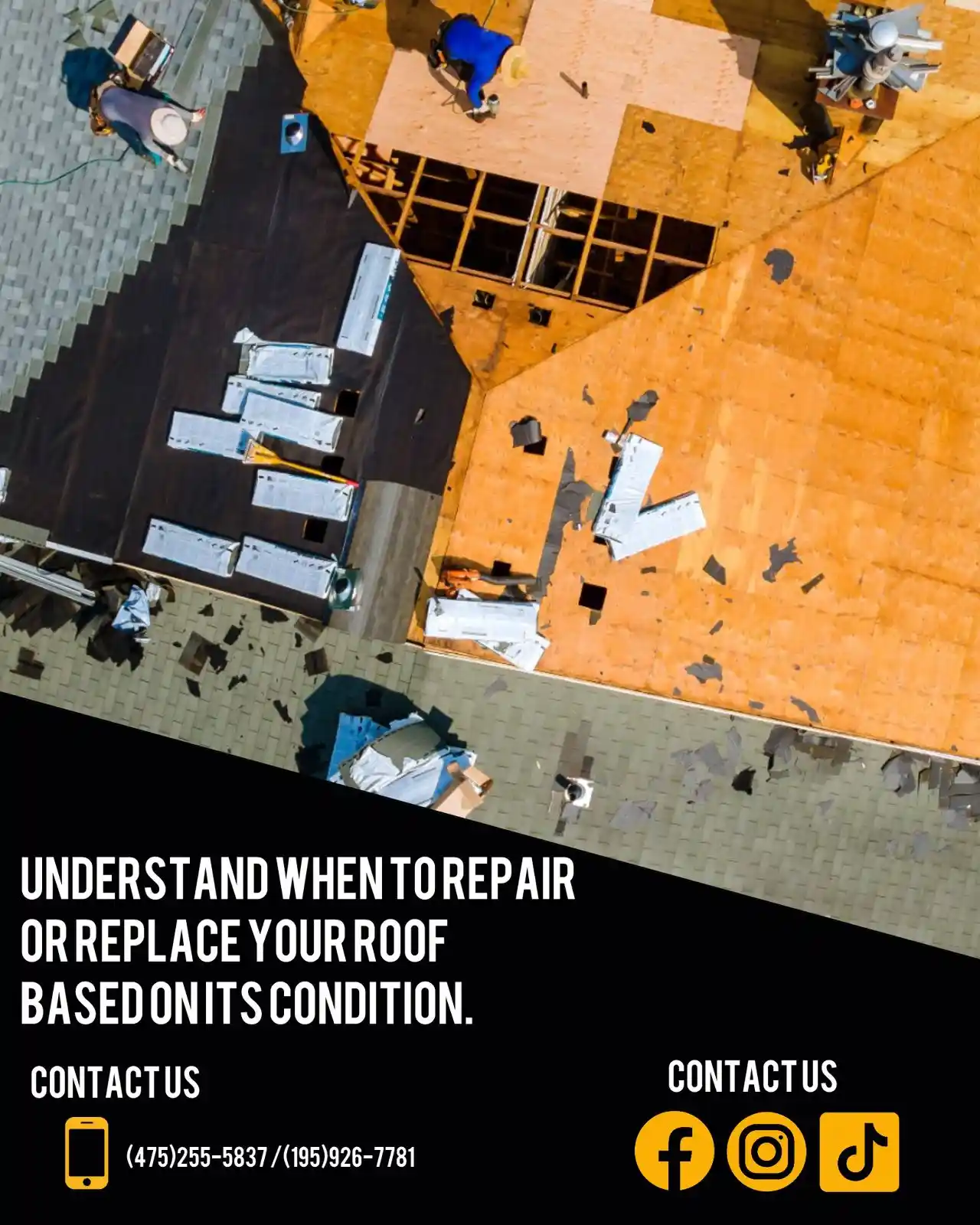
Should you repair your roof or replace it? This is one of the most consequential decisions Connecticut homeowners face when they discover a roofing problem. Get it wrong in either direction and the cost is significant. Repair a roof that needed replacement and you’ll be calling the roofer again in eighteen months. Replace a roof that only needed a repair and you’ve spent ten times what was necessary.
The challenge is that this decision isn’t always obvious from the outside. A roof can look rough and still have years of useful life in it. Conversely, a roof with only a handful of visible damaged shingles might have systemic problems that make replacement the smarter call.
This guide walks through the five main factors a licensed Connecticut roofer evaluates when making this recommendation so you understand the reasoning and can have an informed conversation when you receive a roofing estimate. The right answer depends on your specific roof, and an honest free inspection from Shigla’s Construction will give you a clear recommendation you can trust.
A standard asphalt shingle roof in Connecticut has a useful life of roughly 20 to 30 years for 3-tab shingles and 25 to 40 years for architectural shingles, depending on attic ventilation, exposure, and maintenance history. If your roof is under 15 years old and the damage is localized, repair is almost always the right call. If it’s past 20 years and showing widespread wear, replacement deserves serious consideration even if the current damage looks minor.
Here’s the practical reason: the materials, workmanship warranty, and insurance terms all change when you cross the threshold into an aging roof. Repairing a 25-year-old roof with 3-tab shingles that are at the end of their rated life is a short-term fix on a system that will need replacement soon regardless. A licensed roofer should always tell you the current age of your roof as part of the inspection conversation.
Localized damage a section of missing shingles after a storm, a single flashing failure, a small area of lifted shingles around a vent is the ideal repair candidate. When damage is contained to one area of the roof and the surrounding shingles are in solid condition, a targeted repair restores full performance at a fraction of replacement cost.
Widespread damage changes the calculation. If multiple areas of the roof are showing granule loss, cracking, curling, or lifted edges, you’re looking at systemic deterioration rather than isolated incidents. In that scenario, repairing one section while the others continue to fail is a losing strategy. You spend money repeatedly without ever achieving a reliable roof and total repair costs eventually exceed what replacement would have cost upfront.
This factor only becomes fully visible during a roof tear-off but it can be estimated during inspection in some cases. Soft spots on the roof surface, visible sagging between rafters, and severe water staining on the roof deck visible from inside the attic all indicate decking damage that can’t be addressed through shingle repair alone.
When decking is compromised, a repair that only addresses the shingles doesn’t solve the structural problem below. Significant decking replacement usually tips the cost-benefit calculation toward full replacement because if you’re tearing off shingles and replacing large areas of decking anyway, the incremental cost of completing the full replacement is often modest relative to the benefit of a new roof system and warranty.
Repair history is an honest indicator of a roof approaching the end of its productive life. A roof that has been repaired twice in five years in different areas, for different reasons is telling you something about the overall state of the system. Each repair may be technically correct, but the pattern reveals a roof that’s deteriorating across multiple fronts.
When we hear that a homeowner has had their current roof repaired several times and is now facing another repair, we always recommend a full inspection to evaluate whether replacement makes more financial sense. The math often becomes clear: three repairs at $1,200 to $2,000 each approaches the cost of a small full replacement without the warranty, new materials, or long-term reliability.
Many roofing professionals and some insurance companies use a guideline that if repairs cost more than 50% of the replacement cost, replacement is the better investment. This isn’t a hard rule, but it’s a reasonable framework. A $3,000 repair on a roof that would cost $14,000 to replace is worth evaluating differently than a $7,000 repair on the same roof.
Absolutely, and we encourage it. A licensed roofing contractor should be able to explain clearly and specifically why they’re recommending repair versus replacement with visual evidence from the inspection. If a contractor recommends full replacement on a relatively young roof with localized damage without a thorough explanation, getting a second opinion is the right call.
It can. If storm damage is involved, your insurer may assess the roof and recommend repair or replacement based on their adjuster’s evaluation. Their recommendation is not always the same as a licensed roofer’s adjusters sometimes underscope the actual damage. Shigla’s Construction can inspect independently and provide documentation that supports the full repair or replacement scope if warranted.
A quality roof repair using matching materials and proper technique should last several years sometimes much longer if the surrounding roof is in good condition. A repair on a roof with widespread underlying deterioration may last a year or two before adjacent areas develop new problems. This is why the surrounding roof condition is as important as the repair itself.
Our roofing repair estimates are written and include: specific description of the repair scope, materials to be used including manufacturer and specification, labor, and a timeline. We don’t give verbal estimates or open-ended scopes. You know exactly what will be done and what it costs before we start. Free estimates on all roofing work no obligation.